Why Choose Project-Based Learning for Your Child?
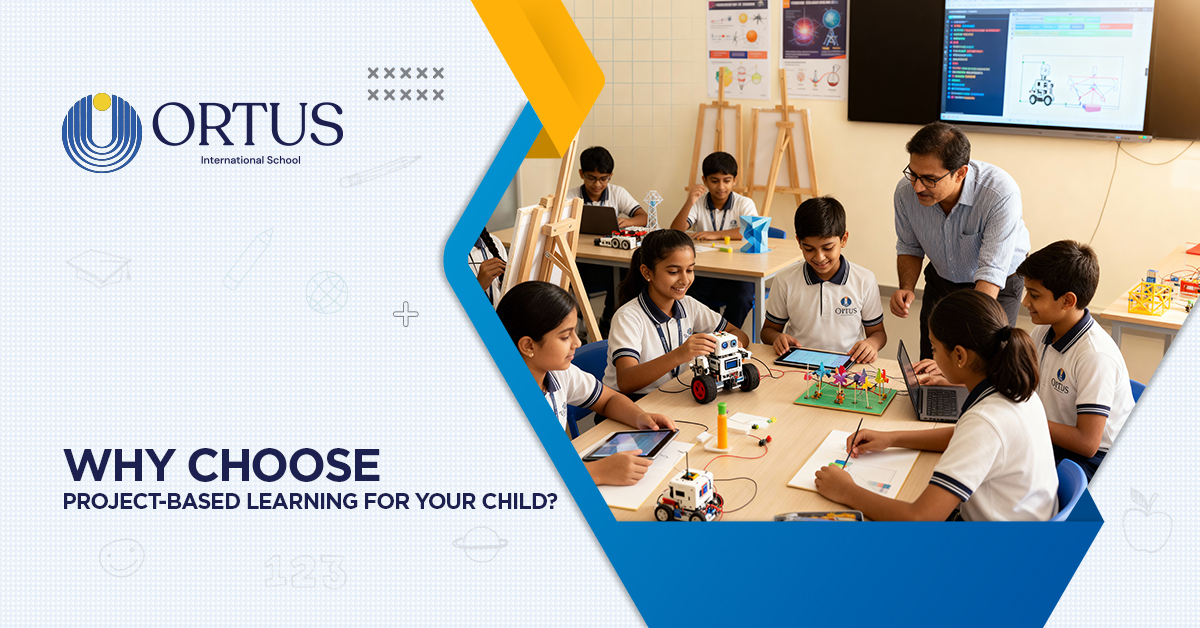
Every parent wants their child to enjoy learning, understand the lessons, and acquire skills that will benefit them in the future. One learning method that supports all of this is project-based learning. Instead of just memorising from books, children learn by doing real projects. This makes learning more exciting, practical, and meaningful.
If you have ever wondered what project-based learning is and how it can help, here’s a simple explanation. It is a method where children learn through activities, experiments, and hands-on tasks. They explore ideas, ask questions, work with others, and create something at the end. That final result could be a model, a presentation, a poster, or even a small invention. The goal is for children to learn by thinking and doing, not just by reading and writing.
What is Project-Based Learning?
Put simply, project-based learning means students learn through projects instead of just listening to lessons. They spend time working on real tasks based on project-based learning topics. This makes learning interesting since they get involved in every step, right from planning to the final presentation.
The project management is student-led; they research, solve problems, decide, and finish the project with their own ideas. This is why they remember what they learn for a longer period.
Why It Matters
One of the most significant reasons project-based learning is gaining favour with schools and parents alike is that it allows the children to be active learners. They don't just read; they explore. They don't just copy answers; they understand them.
Children learning through this method remain very interested. They enjoy learning because it does not feel like pressure, but rather fun. When they are excited about a project, students automatically work harder and are proud of what they complete.
It also builds confidence. When a child finishes the project with their own effort, they are proud and strong. The confidence stays with them for the future.
Advantages of Project-Based Learning
Many advantages of project-based learning can help children in school and later in life:
- Better understanding – Children spend time exploring topics deeply, so learning stays in their minds longer.
- Creativity and problem-solving – Projects involve planning, building, testing, and changing ideas when something doesn't work.
- Stronger communication skills – Children learn to explain their ideas clearly and confidently.
- Teamwork – Many projects are group-based, helping students learn cooperation and sharing.
- Independent thinking – Students learn to research, find answers, and make decisions on their own.
- Real-world connection – Children understand how lessons relate to everyday life.
- These advantages help children grow emotionally, socially, and academically.
Project-Based Learning Ideas
The best thing is that project-based learning ideas are unlimited. Projects can be from science, mathematics, art, environment, history, or daily life. For example, children can:
- Build simple models
- Create posters or drawings
- Conduct small experiments
- Write stories or reports
- Present their ideas to others
Parents can also try project-based learning at home. Activities like planting seeds, building crafts, or designing a small project can teach teamwork, patience, and problem-solving.
Project-Based Learning Topics
Schools can choose many project-based learning topics, such as nature, inventions, community, food, planets, animals, or health. When children learn through topics they find interesting, they stay motivated, feel curious, and get excited to explore more.
When students enjoy what they are learning, the quality of their work also improves.
Why Children Learn Better with Projects
Education today is not just about remembering information. Children need skills that help them in real-life thinking, planning, communicating, and solving problems. Project-based learning builds all these skills naturally.
When students work on a project:
- They plan from start to finish
- They face challenges and learn to fix them
- They express their thoughts clearly
- They learn responsibility and leadership
These are skills that will help them in any career or future goal. That is why many parents choose this method for their child.
Why Parents Choose Project-Based Learning
Parents want their children to enjoy school, learn with confidence, and uncover their strengths. Project-based learning supports all of this. Children feel more confident, more creative, more independent.
Children do not rush through chapters but take time to really learn. They experience the joy of seeing how hard work turns into a finished project. This makes school both meaningful and memorable.
With so many project-based learning ideas and interesting project-based learning topics, children never feel bored. They feel involved, active, and excited.
Conclusion
Choosing project-based learning is choosing a smarter and more joyful way of education. This method helps children think, create, and explore. It teaches them teamwork, communication, confidence, and real-world understanding.
The many advantages of project-based learning show that it is one of the most powerful ways to help children grow. Every project teaches something new and that learning stays with them for life.